
Magnetic Separators – for Industrial Applications
Magnetic separators remove ferromagnetic particles and foreign material from liquid media and bulk solids. Compare designs, operating principles and selection criteria for your process.
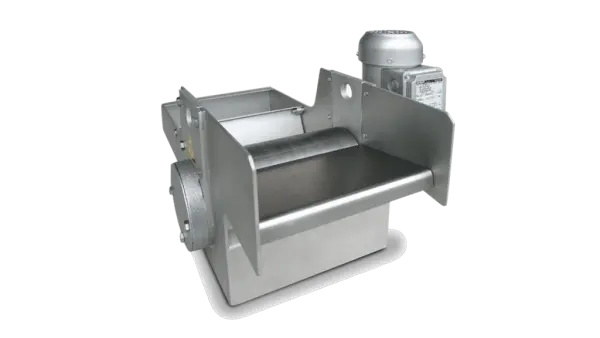
Summary
Magnetic Separators – Short Definition
A magnetic separator is a technical system that uses permanent or electromagnetic fields to extract magnetically conductive particles—usually iron metals—from a non-magnetic carrier medium such as bulk solids, liquids, or gases. It functions as a filter medium that selectively acts on the magnetic susceptibility of particles contained in the material flow. The operating principle is based on magnetic separation, in which ferromagnetic materials are attracted by an inhomogeneous magnetic field and removed from the product stream.
Industrieller Kontext
In an industrial context, a primary distinction is made between machine protection—removing coarse parts such as screws or nails—and quality assurance, which focuses on removing the finest iron abrasion or paramagnetic stainless-steel particles. While machine-protection separators primarily capture large metal parts that could cause machine damage, quality-assurance units are designed to remove the smallest particles that could impair product quality.
History and Development
The use of magnetic forces to separate materials has a long history. As early as antiquity, people used natural magnets, known as lodestones, to separate iron-containing materials. Modern magnetic separation, however, only developed with industrialization in the 19th century. The first industrial magnetic systems were used in the mining industry to separate iron ore from rock. With the development of strong permanent magnets made of Alnico in the 1930s, they became interesting for other industries as well. The introduction of ferrite magnets in the 1950s made these systems more cost-effective and widely available. The breakthrough came with the development of neodymium-iron-boron (NdFeB) magnets in the 1980s, which offer up to five times the magnetic field strength of ferrite magnets. This development enabled the separation of very small particles and weakly magnetic materials such as stainless steel.
Functionality and Physical Principles
The function of these systems is not based solely on magnetic attraction, but on the interaction of several physical quantities.
To successfully separate a particle from a product stream, the magnetic force must be greater than the sum of opposing forces, including gravity, flow resistance, friction, and inertia. This complex interaction of various forces makes their design a demanding engineering task.
The Physics of Separation
The magnetic force acting on a particle is described by the following relationship:
Fₘ = V · χ · H · dB/dxWobei:
- V: Volume of the particle
- χ: Magnetic susceptibility of the material
- H: Magnetic field strength
- dB/dx: Field gradient (change in flux density over distance)
The Separation Process
Entry
The contaminated material enters the effective range of the magnetic field. The particles move through the system with the product stream. The speed and direction of the product stream significantly influence the efficiency of separation.
Capture
Ferromagnetic particles are accelerated toward the magnetic poles by the Lorentz force and magnetic attraction. The strength of this attraction depends on the magnetic field strength, the field gradient, and the magnetic properties of the particle.
Retention
The particles adhere to the pole surface or extractor tube and must be held there against the flow force of the downstream product. This requires a sufficiently high magnetic holding force that must be greater than the acting flow forces.
Discharge
The separated metal parts are removed from the system either manually or automatically, for example by a scraper system. Modern systems feature automatic cleaning cycles that enable continuous operation.
Magnetic Properties of Materials
Not all metals are captured by such systems. Magnetic susceptibility determines how strongly a material reacts to a magnetic field. Ferromagnetic materials such as iron, nickel, and cobalt are strongly attracted. Paramagnetic materials such as aluminum and platinum are weakly attracted, while diamagnetic materials such as copper and zinc are even slightly repelled. Austenitic stainless steel is normally paramagnetic but can develop ferromagnetic properties through cold working or abrasion.
Types of Magnetic Separators Compared
The design is determined by the conveying medium (dry or liquid), the conveying method (free-fall, pressure, or belt), and the required level of purity.
There are various designs, each optimized for specific applications. Selecting the right type depends on numerous factors, including the type of material to be processed, particle size, throughput, and purity requirements.
| Type | Operating Principle | Typical Application | Advantages | Disadvantages |
|---|---|---|---|---|
| Tube Magnet / Grid Magnet | Grid of magnetic rods in the product stream flowing by gravity. The magnetic rods are arranged in a staggered pattern to ensure maximum contact surface. | Powders, granulates, grain, plastics, free-flowing bulk materials. | High field strength in the contact area, easy to retrofit, cost-effective, maintenance-friendly. | Risk of bridging with poorly flowing products, limited capture depth. |
| Overband Magnet | Magnet block above a conveyor belt pulls ferromagnetic parts upward out of the material stream. | Recycling, mining, wood chips, waste incineration, coarse bulk materials on conveyor belts. | Continuous cleaning possible, no product congestion, high capture depth, suitable for large throughputs. | Less efficient for very fine particles below the layer thickness, higher space requirement. |
| Plate Magnet | Flat magnetic plate installed in chutes or under conveyor belts to attract ferromagnetic particles. | Coarse bulk materials, fibrous materials, materials with high flow velocity. | No flow resistance, no clogging, wear-resistant, easy to install. | Lower field strength deep in the flow compared to grids, limited separation performance for fine particles. |
| Drum Magnet | A magnetic drum has a rotating shell around a stationary magnetic core. Material is conveyed over the drum, with ferromagnetic particles adhering to the drum until they are discharged outside the magnetic field. | Recycling, shredder material, food processing, continuous high-throughput processes. | Fully automatic, continuous separation, high efficiency, suitable for large volumes. | More complex installation, moving parts require maintenance, higher acquisition costs. |
| Liquid Filter (Liquid Trap) | Magnetic rods inside a closed pressure vessel through which the liquid flows. | Chocolate, syrup, paints, cooling water, viscous liquids, pressure pipelines. | Removes fine iron from viscous media, suitable for pressure applications, high separation efficiency. | Pressure loss in the system must be considered, cleaning requires downtime, higher complexity. |
| Rotary Magnetic Separator | The magnetic rod cage rotates inside the housing to loosen the material while simultaneously capturing iron particles. | Poorly flowing powders, sticky materials, products prone to bridging. | Prevents bridging, improves material flow, continuous cleaning possible. | Moving parts, higher energy consumption, more complex design. |
Expert tip: For poorly flowing powders prone to bridging, rotary designs are recommended. Here, the magnetic rod cage rotates inside the housing to loosen the powder while capturing iron. This design is particularly suitable for moist or sticky materials that would cause blockages in conventional grid magnets.
Comparison of Magnet Materials
Choosing the right magnet material is crucial for the performance of the system
Various magnet materials are used in these units. Each material has specific properties that make it suitable for certain applications.
Ferrite Magnets (Ceramic)
Ferrite magnets, also known as ceramic magnets, are the most cost-effective option. They are made of barium or strontium ferrite and offer good temperature stability.
Eigenschaften:
- Low acquisition cost
- Temperature-resistant up to 250°C
- Corrosion-resistant
- Suitable for coarse iron and large particles
- Lower field strength than neodymium magnets
- Larger dimensions required for equivalent performance
Anwendungen:
Coarse metal parts, screws, nails, recycling applications, high-temperature applications
Neodymium Magnets (NdFeB)
Neodymium-iron-boron magnets belong to the group of rare-earth magnets and offer the highest available magnetic field strength. They are up to five times stronger than ferrite magnets.
Eigenschaften:
- Extremely high field strength (up to 14,000 Gauss)
- Compact design possible
- Standard temperature range up to 80°C
- Special variants available up to 200°C
- Essential for fine iron and stainless steel
- More temperature-sensitive than ferrite
- Corrosion protection required
Anwendungen:
Fine iron particles, stainless steel abrasion, food industry, pharmaceutical industry, applications with the highest purity requirements
Samarium-Cobalt Magnets (SmCo)
Samarium-cobalt magnets offer high field strength with excellent temperature stability but are significantly more expensive than neodymium magnets.
Eigenschaften:
- High field strength similar to neodymium
- Temperature-resistant up to 350°C
- Very good corrosion resistance
- Higher cost than neodymium
- Less widely available
Anwendungen:
High-temperature applications, corrosive environments, specialized industrial applications
Fields of Application
Magnetic separators are used across various industries and are an indispensable component of modern production processes
Requirements vary greatly by industry. While the food industry demands the highest purity standards, efficiency and robustness are paramount in the recycling industry.
Food Industry (Food & Feed)
The food industry is subject to the strictest standards and regulations. They serve as so-called Critical Control Points (CCP) within HACCP systems and must be regularly validated and documented.
Anwendung:
Flour, sugar, spices, milk powder, cocoa powder, starch, grain, nuts, coffee, tea, and many other food raw materials.
Anforderung:
Food-grade stainless steel (1.4404 / 316L), crevice-free welds, high magnetic performance over 10,000 Gauss to separate stainless steel abrasion, for example from sieves or mills. Additionally, the devices must be easy to clean and meet all requirements of the FDA (Food and Drug Administration) and EU Regulation 1935/2004.
Standards:
HACCP, IFS (International Featured Standards), BRC (British Retail Consortium), FDA CFR 21, EC 1935/2004
Recycling & Waste Management
In recycling, the focus is on recovering valuable materials and protecting processing machines such as shredders. They are used at various stages of the recycling process.
Anwendung:
PET recycling, electronic waste, construction waste, waste paper, plastic recycling, scrap metal, automotive recycling.
Anforderung:
Robust design for handling coarse materials, high throughput, often a combination of overband magnets for coarse iron and eddy current separators for non-ferrous metals. Systems must be wear-resistant and capable of handling high loads.
Standards:
Machinery Directive 2006/42/EC, ATEX for dust explosion hazard areas
Plastics Industry (Injection Molding & Extrusion)
In the plastics industry, they primarily protect expensive tools and system components. Metal particles can cause significant damage.
Anwendung:
Granulate feed before injection molding machines, extrusion systems, blow molding machines, all processes involving plastic granulate.
Anforderung:
Metal particles can clog nozzles, damage screws, or cause quality issues in the final product. The systems are therefore installed directly before the processing machine to ensure maximum protection.
Standards:
Machinery Directive, CE marking
Chemicals & Pharmaceuticals
The chemical and pharmaceutical industries have the highest purity requirements. Any contamination can lead to product recalls or safety issues.
Anwendung:
Pigments, tablet presses, pharmaceutical active ingredients, chemicals, paints, coatings.
Anforderung:
ATEX-compliant designs are often required for dust explosion hazard areas. Devices must be easy to clean and leave no residues. In pharmaceutical applications, additional validation protocols are required.
Standards:
ATEX Directive 2014/34/EU, GMP (Good Manufacturing Practice), FDA requirements
Mining & Mineral Processing
In mining, they are used to separate ores and remove foreign bodies. Requirements for robustness and throughput are particularly high.
Anwendung:
Ore processing, coal preparation, mineral processing, sand and gravel extraction.
Anforderung:
Extremely robust design for handling abrasive materials, high throughput, wear-resistant components. Large overband magnets or drum magnets are often used.
Standards:
Machinery Directive, explosion protection
Textile Industry
In the textile industry, they are used to remove metal particles from fiber materials that could cause machine damage or quality issues.
Anwendung:
Cotton processing, wool processing, synthetic fibers, nonwovens.
Anforderung:
Gentle handling of fibers, no damage to the material, high separation efficiency for fine particles.
Standards:
Machinery Directive
Selection Criteria & Technical Specifications
When designing a magnetic separator—also known as sizing—engineers must consider numerous parameters
Correct selection is crucial for application success. Incorrect sizing can result in insufficient separation performance, product quality issues, or even machine damage.
Magnet Material
Choosing the magnet material is one of the most important decisions when designing such systems.
Ferrite (Ceramic)
Ferrite magnets are inexpensive, provide a deep magnetic field, and are temperature-resistant up to 250°C. They are well suited for coarse iron and large particles but are insufficient for fine particles or stainless steel.
Neodymium (NdFeB)
Neodymium magnets are up to five times stronger than ferrite magnets and are essential for fine iron and weakly magnetic stainless steels. The standard temperature range is up to 80°C, with special variants available up to 200°C. However, corrosion protection is required.
Pole Spacing & Rod Diameter
The distance between magnetic poles and the diameter of the magnetic rods significantly influence separation performance. Fine powders require thin rods with close spacing to achieve a high field gradient. Coarse chunks such as ore or coal require large block magnets with deep fields capable of capturing particles at greater distances.
The distance between magnetic poles and the diameter of the magnetic rods significantly influence separation performance. Fine powders require thin rods with close spacing to achieve a high field gradient. Coarse chunks such as ore or coal require large block magnets with deep fields capable of capturing particles at greater distances.
Throughput & Flow Velocity
Product flow velocity is a critical factor. If the product flows too fast—for example, over 2 meters per second in free fall—the magnetic holding force may be overcome. This phenomenon is known as the wash-off effect. In such cases, baffle plates or step magnets are required to reduce speed and increase dwell time in the magnetic field.
Product flow velocity is a critical factor. If the product flows too fast—for example, over 2 meters per second in free fall—the magnetic holding force may be overcome. This phenomenon is known as the wash-off effect. In such cases, baffle plates or step magnets are required to reduce speed and increase dwell time in the magnetic field.
Product Properties
- Moisture and viscosity influence bridging and material flow. Wet or sticky materials require special designs such as rotary units.
- Material abrasiveness requires hardened surfaces or coatings such as tungsten carbide on magnet tubes to minimize wear.
- Particle size determines the required magnetic field strength and field gradient. Very fine particles require high-strength neodymium magnets.
- Product temperature influences the choice of magnet material. High temperatures require ferrite magnets or special high-temperature neodymium variants.
- pH value and chemical composition can affect magnet corrosion resistance and require appropriate protective measures.
Installation Location and Space Constraints
Available space and position in the process chain influence the choice of system. End-of-line installations ensure the highest product purity, while in-line installations improve machine protection.
Available space and position in the process chain influence the choice of system. End-of-line installations ensure the highest product purity, while in-line installations improve machine protection.
Cleaning Requirements
Cleaning frequency and method influence the choice between manual, semi-automatic, and fully automatic systems. Continuous processes require automatic cleaning systems.
Cleaning frequency and method influence the choice between manual, semi-automatic, and fully automatic systems. Continuous processes require automatic cleaning systems.
Installation, Operation & Maintenance
Correct installation and regular maintenance are crucial for the efficiency and service life of the equipment
The equipment can only function optimally if it is correctly installed, operated, and maintained. Installation errors can lead to significant performance losses.
Installation
- Install the unit as close as possible to the end of the process chain—also referred to as end-of-line—to ensure final product purity. This ensures that all contaminants generated throughout the process are captured.
- Avoid direct mounting on heavily vibrating machines, as vibrations can promote detachment of fine iron particles. Use vibration dampers or flexible connections if necessary.
- Warning: Ferromagnetic components in close proximity can short-circuit the magnetic field—a phenomenon known as shunting. Maintain minimum clearances of at least 50 millimeters from ferromagnetic materials.
- Ensure that the magnetic separator is easily accessible for maintenance and cleaning. This significantly reduces downtime.
- When installing in pressure pipelines, pressure loss must be considered. Consult the manufacturer’s technical data.
Maintenance & Cleaning
The equipment is only as good as its maintenance condition. A saturated magnet—one fully covered with iron particles—loses much of its capture effectiveness. Cleaning intervals depend on the contamination load and should be regularly reviewed.
Manual Cleaning
During manual cleaning, iron particles are removed by hand. This requires system downtime. Observe occupational safety: There is a risk of cuts from sharp metal shavings. Wear appropriate protective gloves.
Easy-Clean / Quick-Clean
With Easy-Clean or Quick-Clean systems, the sleeves remain in the product stream while the magnet cores can be pulled out. The iron particles then fall off without fully dismantling the system. This significantly reduces downtime.
Automatic Cleaning
Pneumatic or hydraulic cycles automatically clean the magnet at defined intervals, for example during 24/7 operation. These systems enable continuous operation without manual intervention.
Common Errors and How to Avoid Them
- Demagnetization: Heat—for example, welding on the housing without first removing the magnets—or strong impacts can demagnetize magnets. Avoid temperatures above the Curie temperature of the magnet material.
- Wear: Worn-through sleeves in abrasive media can cause the product to contact the magnets and become contaminated, or magnet material to enter the product. Regular inspection and timely replacement of worn components are essential.
- Contamination: A contaminated magnet loses effectiveness. Ensure cleaning intervals are adhered to.
- Incorrect installation: An incorrectly installed magnetic separator cannot function optimally. Follow the manufacturer’s installation instructions precisely.
Regular Inspection
Regular inspections should be carried out to detect wear early. Check magnetic field strength using a teslameter or gaussmeter, inspect sleeves for wear, and ensure all seals are intact.
Advantages & Limitations
These systems offer numerous advantages but also have certain limitations that must be considered
Advantages of Magnetic Separators
- Cost efficiency: Permanent magnet separators consume no ongoing energy costs for the magnetic field, unlike electromagnetic systems. This makes them particularly economical for continuous processes.
- Durability: With proper handling, neodymium magnets lose less than one percent of their charge per ten years, resulting in a very long service life with minimal performance loss.
- Safety: Magnetic separators prevent costly machine downtime caused by metal particles and significantly reduce the risk of product recalls. In the food industry, they can even be life-saving.
- Environmental friendliness: Since no energy is required for the magnetic field, permanent magnet separators have a very low CO2 footprint.
- Ease of maintenance: Modern magnetic separators are designed to be maintenance-friendly and require minimal servicing.
- Versatility: Magnetic separators can be used in a wide range of applications, from dry bulk solids to viscous liquids.
Limitations and Restrictions
- Non-magnetic metals: Copper, aluminum, brass, and other non-ferromagnetic metals are not captured by standard magnetic separators. Eddy current separators or all-metal detectors are required for these applications.
- Stainless steel: Austenitic stainless steel, such as V2A, is paramagnetic and difficult to capture. This requires extremely high field strengths above 12,000 Gauss, achievable only with neodymium magnets. Even then, separation performance for fully austenitic stainless steel is limited.
- Temperature limits: Standard neodymium magnets lose magnetization at temperatures above 80°C. Special variants or ferrite magnets are required for high-temperature applications.
- Particle size: Very small particles below 10 micrometers can be difficult to capture and require special high-gradient magnets.
- Product velocity: At very high flow velocities, magnetic holding force can be overcome, resulting in a wash-off effect.
Safety and Standards Requirements
Compliance with industry standards is essential for the safe and lawful operation of magnetic separators
Magnetic separators must comply with numerous standards and regulations that vary depending on the application. Adherence to these standards is not only legally required but also essential for the safety of personnel and consumers.
Machinery Directive 2006/42/EC
The European Machinery Directive governs the general safety of machinery. Magnetic separators must meet the requirements of this directive and bear CE marking.
ATEX Directive 2014/34/EU
For use in potentially explosive atmospheres, such as dust explosion hazard environments or near flammable gases, magnetic separators must be ATEX-compliant. They must be grounded to prevent static discharge and carry appropriate certification.
Food Contact
- FDA CFR 21: Materials that come into contact with food must comply with the requirements of the U.S. Food and Drug Administration. This includes the use of approved materials and documentation of compliance.
- EC 1935/2004: The European regulation on materials in contact with food governs requirements for materials that come into direct or indirect contact with food. Magnetic separators for the food industry must comply with these requirements.
HACCP (Hazard Analysis and Critical Control Points)
In the food industry, magnetic separators must be documented as Critical Control Points (CCP) within HACCP systems and regularly validated. This includes annual inspections using a gaussmeter to verify magnetic field strength and documentation of all maintenance and cleaning activities.
RoHS Directive
The RoHS Directive (Restriction of Hazardous Substances) restricts the use of certain hazardous substances in electrical and electronic equipment. While permanent magnet separators contain no electrical components, the materials used must still be RoHS-compliant.
ISO 9001
Many manufacturers of magnetic separators are ISO 9001 certified, ensuring continuous quality assurance. This is an important quality indicator when selecting a supplier.
Comparison with Alternative Technologies
Magnetic separators are not the only technology for removing foreign bodies
Various technologies exist for removing foreign bodies from product streams. Each has its advantages and disadvantages, and multiple technologies are often combined.
Metal Detectors
Metal detectors detect metal particles but do not automatically remove them. They stop the process or trigger a reject flap. Magnetic separators and metal detectors are often combined: the magnetic separator removes most particles, while the metal detector serves as a final check.
Vorteile:
Detects non-magnetic metals, very sensitive, suitable as a final inspection
Nachteile:
Does not automatically remove particles, requires process interruption, higher cost
Eddy Current Separators
Eddy current separators use rotating magnets to capture electrically conductive but non-magnetic metals such as aluminum and copper. They are often used in combination with magnetic separators.
Vorteile:
Captures non-magnetic metals, high efficiency for conductive materials
Nachteile:
Only suitable for conductive metals, higher energy consumption, more complex design
Screens and Filters
Mechanical screens and filters can remove particles based on size, regardless of magnetic properties.
Vorteile:
Simple, cost-effective, captures all particles above a certain size
Nachteile:
Only for particles above a certain size, can clog, require regular cleaning
X-ray Inspection
X-ray systems can detect various foreign bodies, including non-metallic ones, but are very expensive and require special safety measures.
Vorteile:
Detects various foreign body types, very sensitive
Nachteile:
Very expensive, requires radiation protection, complex maintenance
Economic Efficiency and Cost-Benefit Analysis
Investment in a magnetic separator is generally very economical
The cost of a magnetic separator is usually very low compared to potential damage caused by metal particles. A cost-benefit analysis should consider several factors.
Acquisition Costs
Acquisition costs vary depending on the type and size of the magnetic separator. Simple tube magnets start at a few hundred euros, while complex automatic systems can cost several thousand euros.
Operating Costs
Permanent magnet separators have virtually no operating costs, as they require no energy for the magnetic field. Only maintenance and cleaning costs apply, which are minimal.
Savings Potential
Savings from a magnetic separator can be substantial: prevention of machine damage, reduction of product recalls, improvement of product quality, and increased customer satisfaction. In the food industry, the cost of a product recall can amount to millions of euros.
Payback Period
The payback period of a magnetic separator is usually very short—often less than one year—especially in critical applications such as the food industry.
Weiterführende Fachartikel
Vertiefende Informationen zu speziellen industriellen Trennprozessen.
Frequently Asked Questions
Answers to the most important questions about our products and their applications.
Specify a Magnetic Separator for Your Process
Tell us the liquid or bulk material, throughput, temperature, particle size and installation conditions. Our engineers will assess the suitable separator design for your application.